Single-Camera vs Multi-Camera Podcast: Which Is Better?
Single-camera or multi-camera for your video podcast? A practical comparison of cost, edit time, retention and when each setup is the right call.
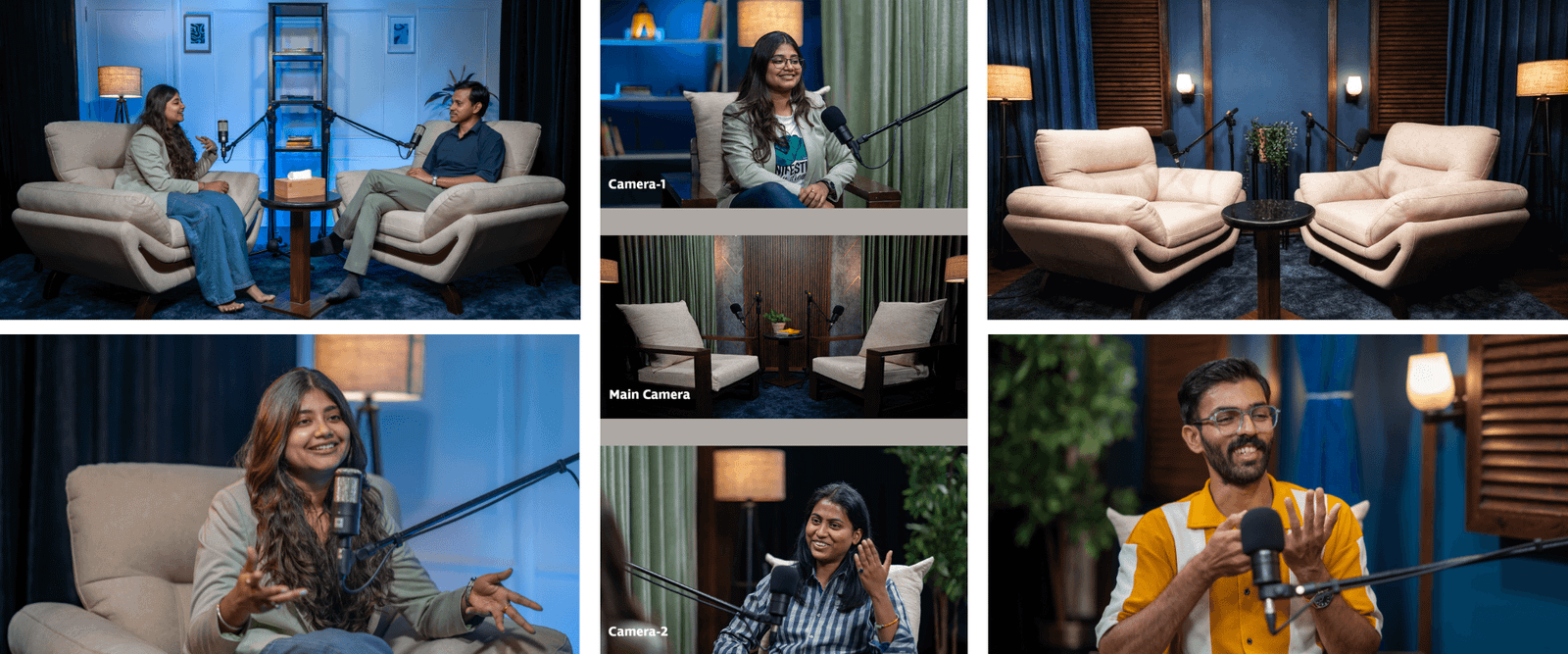
In a single-camera configuration, one camera is typically locked off on a wide or medium-wide frame that holds every speaker in a single continuous perspective across the full recording session.
Where Single-Camera Wins
Lean Session Cost
Fewer sensor bodies mean less rigging time, simplified gear footprints, and a lower base studio rate.
Turnaround Speed
Zero multi-cam track sync. Editors simply trim head and tail, clean audio, and render out in record time.
Shoot Day Simplicity
One frame to light and monitor. Eliminates technical drift, color mismatches, and multi-sensor failures.
Solo Formats
Ideal for individual monologues, course explainers, and keynotes where secondary cuts add zero narrative context.
Where Single-Camera Struggles
The Multi-Camera Setup
Two, three, or more cameras roll simultaneously. The industry-standard three-camera configuration locks a wide master two-shot alongside dedicated, tight single-angle profiles for both host and guest.
Where Multi-Camera Wins
Broadcast Retention
Cutting angles every 15 to 30 seconds sustains viewing momentum, leveraging the identical pacing model used in network television.
Invisible Editing
Flubs, pauses, and tangent sections disappear completely behind natural shot transitions, tightening a 70-minute talk into 50 minutes seamlessly.
Crucial Reaction Frames
Captures non-verbal reactions and listening cues that anchor conversational depth and build genuine authority.
Massive Clip Yield
Dedicated singles are native 9:16 vertical gold. One multi-cam shoot reliably yields 10 to 15 vertical clips via specialized reels editing services.
Head-to-Head Specification Comparison
Both camera architectures are fully supported inside our facilities. You can review the exact layout options on our dedicated podcast studio in Bangalore page.
| Metric | Single-Camera Setup | Multi-Camera Setup |
|---|---|---|
| Session Cost | Economical / Lean | Higher (Tiered Hardware & Crew) |
| Edit Turnaround | Rapid (24-48 Hours Typical) | In-Depth (Requires Multi-Track Cutting) |
| Long-Form Retention | Moderate to Low (Subject to visual fatigue) | High (Visual pacing sustains attention) |
| Short-Form Clip Output | 3-4 usable cutdowns | 10-15 high-fidelity Reels & Shorts |
| Optimal Format | Solo monologues, internal decks, course modules | Interviews, flagship shows, executive panels |
Deploy Single-Camera If:
- Recording solo masterclasses or internal educational series.
- Speed-to-publish outweighs high-end visual polish.
- Total episode run-time sits strictly under 20 minutes.
- Operating on an early pilot budget prioritizing consistency.
Deploy Multi-Camera If:
- Hosting guest conversations in an interview studio in Bangalore.
- Episodes extend beyond 30 minutes in length.
- Reels, YouTube Shorts, and LinkedIn clips drive your acquisition engine.
- Hosting external founders, investors, or corporate leaders.
What Camera Count Does to Your Edit Bill
A single-camera episode is a linear cut: top-and-tail trimming, noise gating, and audio balance. Conversely, multi-camera production requires synchronizing timecode, balancing multi-source exposure, and executing intentional angle decisions every 20 seconds. On a 50-minute episode, that demands over 150 individual cuts.
When budgeting with a facility, never simply ask "how many cameras?" Clarify upfront: what does the finished master include, and what is the turnaround SLA? Discovering that post-production is excluded after wrapping shoot day is the most common pitfall in production management.
The Practical Hybrid Strategy
Many enterprise teams do not lock themselves into a single model. A battle-tested workflow is executing flagship guest interviews with a full 3-camera rig, while producing technical solo commentary, company updates, and product explainers with a single camera. For brands exploring complete video solutions, reviewing our commercial video production frameworks shows how to mix and match formats sustainably.
Remember: camera count is merely an amplifier. A single, beautifully lit camera paired with acoustic treatment in our studio room for rent in Bangalore will outperform an unfocused, poorly lit three-camera setup every single time.
Ready to Configure Your Show's Production Stack?
Consult with our engineering crew in Mahalakshmi Layout, Bengaluru. We'll map out your camera angles, live audio routing, and post-production timelines based on your show's actual distribution goals.